

When Propellers Pull Instead of Push: Scientists Discover Thrust Reversal That Could Redefine Microrobotics
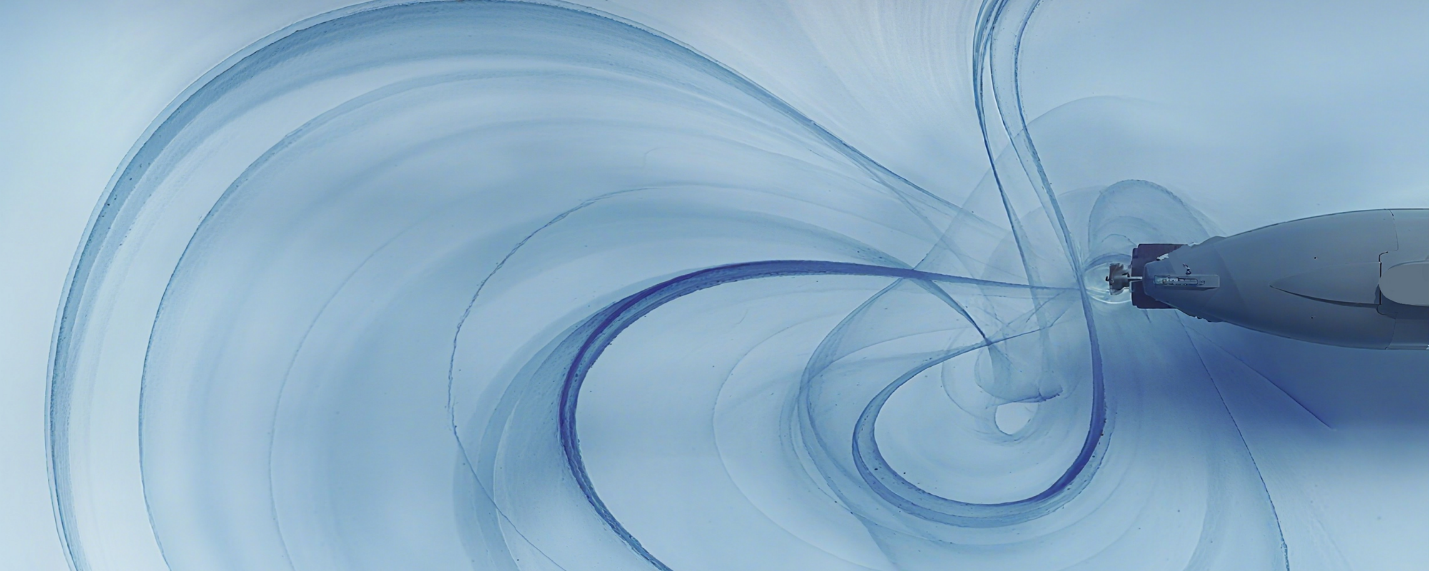
Fig 1: Toy Submarine Propulsion Dynamics
Study finds unexpected ‘suction effect’ at small scales may change how future medical and underwater milli- or micro-robots move.
CHINA, December 22, 2025 /EINPresswire.com/ -- A propeller that pulls instead of pushes sounds like counter-intuitive science fiction, but it’s real, according to a new study.Researchers in Beijing have uncovered a surprising physical effect where a propeller’s spin can suddenly reverse its thrust, drawing itself backward instead of driving forward. The discovery, published in Proceedings of the National Academy of Sciences (PNAS), could revolutionise how tiny robots swim or navigate viscous environments such as blood or oil.
The study, led by Professor Yang Ding from the Beijing University of Posts and Telecommunications, China, explored what happens when traditional propulsion mechanics meet the sticky physics of small-scale motion, a regime known as the intermediate Reynolds number regime. The Reynolds number is a measure comparing inertia to viscosity in fluids, which helps determine whether flow behaves like smooth syrup or turbulent water. At these intermediate values, neither force dominates, making motion particularly complex and unpredictable.
Using a miniature toy submarine and detailed computer simulations, the team observed an unexpected “thrust reversal.” When spun clockwise, the propeller stopped pushing the submarine forward and instead began pulling it backward.
“We were stunned to see the direction of motion flip,” said Prof. Yang Ding, the study’s senior author. “At small scales, the same rotation can create completely opposite effects. It challenges how we think about propulsion itself.”
How we redefined motion for the smallest machines
Understanding this fluid behaviour could unlock more efficient motion strategies for micro- and milli-scale robots, a rapidly growing field spanning medical navigation, environmental cleanup, and pipeline inspection.
“It was amazing to see how the propeller’s forces could be used in new ways,” said Prof. Yang Ding. “By harnessing both propulsion and suction, future microrobots could change direction instantly, saving energy and improving control.”
The research provides design principles that could help engineers build smarter, smaller, and more adaptive machines.
Conclusion
The results of the study revealed that propellers operating at intermediate Reynolds numbers can unexpectedly reverse thrust due to centrifugal suction. This finding challenges long-standing assumptions about how propulsion works at small scales and highlights the necessity for engineers to approach this regime with fresh design strategies. It also opens up applications ranging from medical microrobots to environmental and agricultural tools. Hence, recognizing and addressing this effect will be crucial for ensuring reliable performance in real-world technologies.
About the Authors
Prof. Yang Ding leads the research group at the School of Physical Science and Technology, Beijing University of Posts and Telecommunications. His work focuses on fluid dynamics, biomechanics, and bio-inspired robotics, exploring how principles from nature can inform next-generation engineering design.
Read the full article here: https://www.pnas.org/doi/10.1073/pnas.2504153122
Andrew Smith
Charlesworth Publishing Limited
+ +44 7753 374162
marketing@charlesworth-group.com
Visit us on social media:
LinkedIn
YouTube
Other
Legal Disclaimer:
EIN Presswire provides this news content "as is" without warranty of any kind. We do not accept any responsibility or liability for the accuracy, content, images, videos, licenses, completeness, legality, or reliability of the information contained in this article. If you have any complaints or copyright issues related to this article, kindly contact the author above.
