
Cora di Brazzà Foundation Launches Educational Initiative on Symbolism, Time, and the Ethics of Reverence
Logo of the Cora di Brazzà Foundation
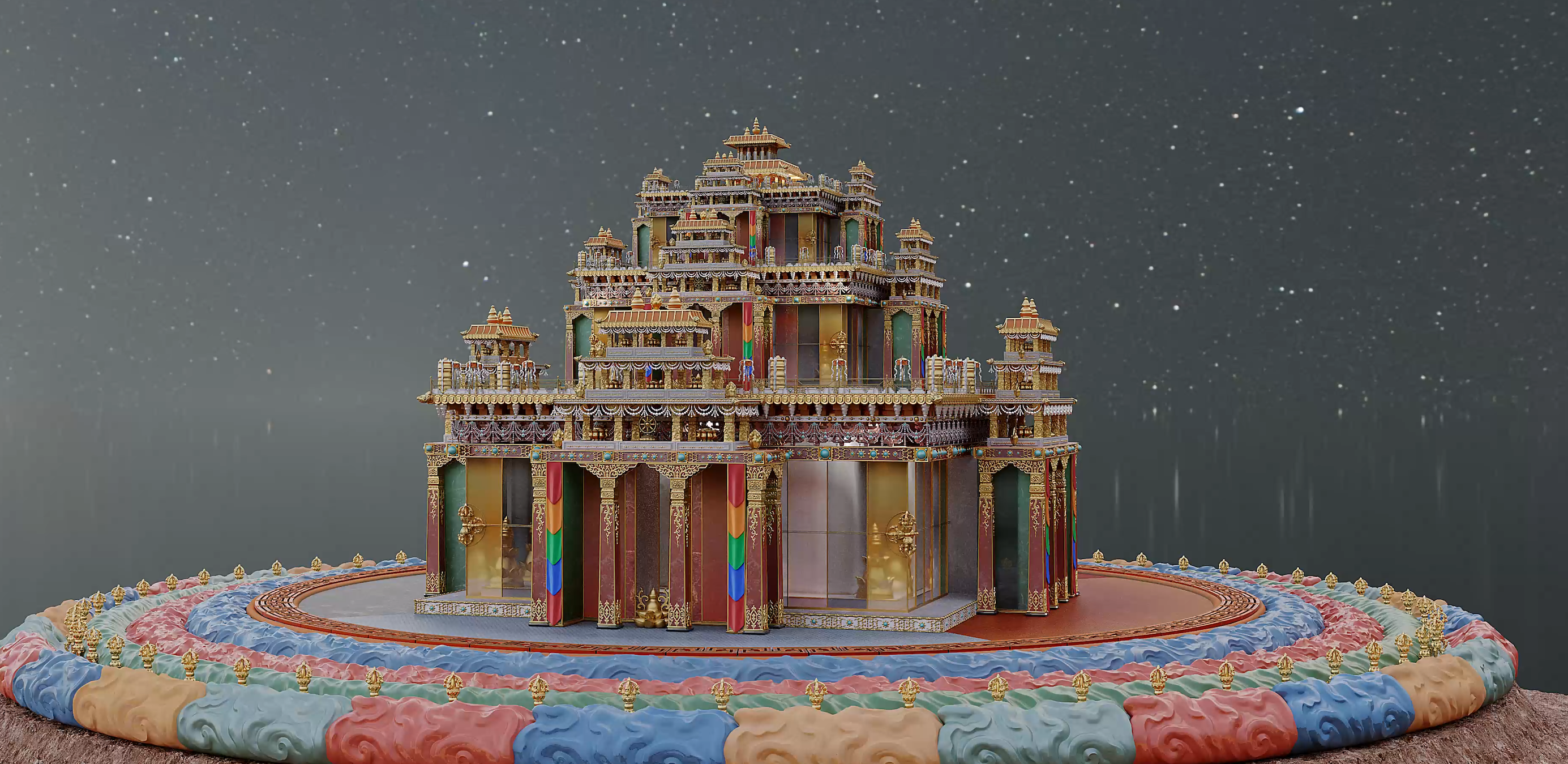
Artist Pema Namdol Thaye's digital rendering of Kalachakra Mandala. Copyright Padma Studios. All rights reserved.
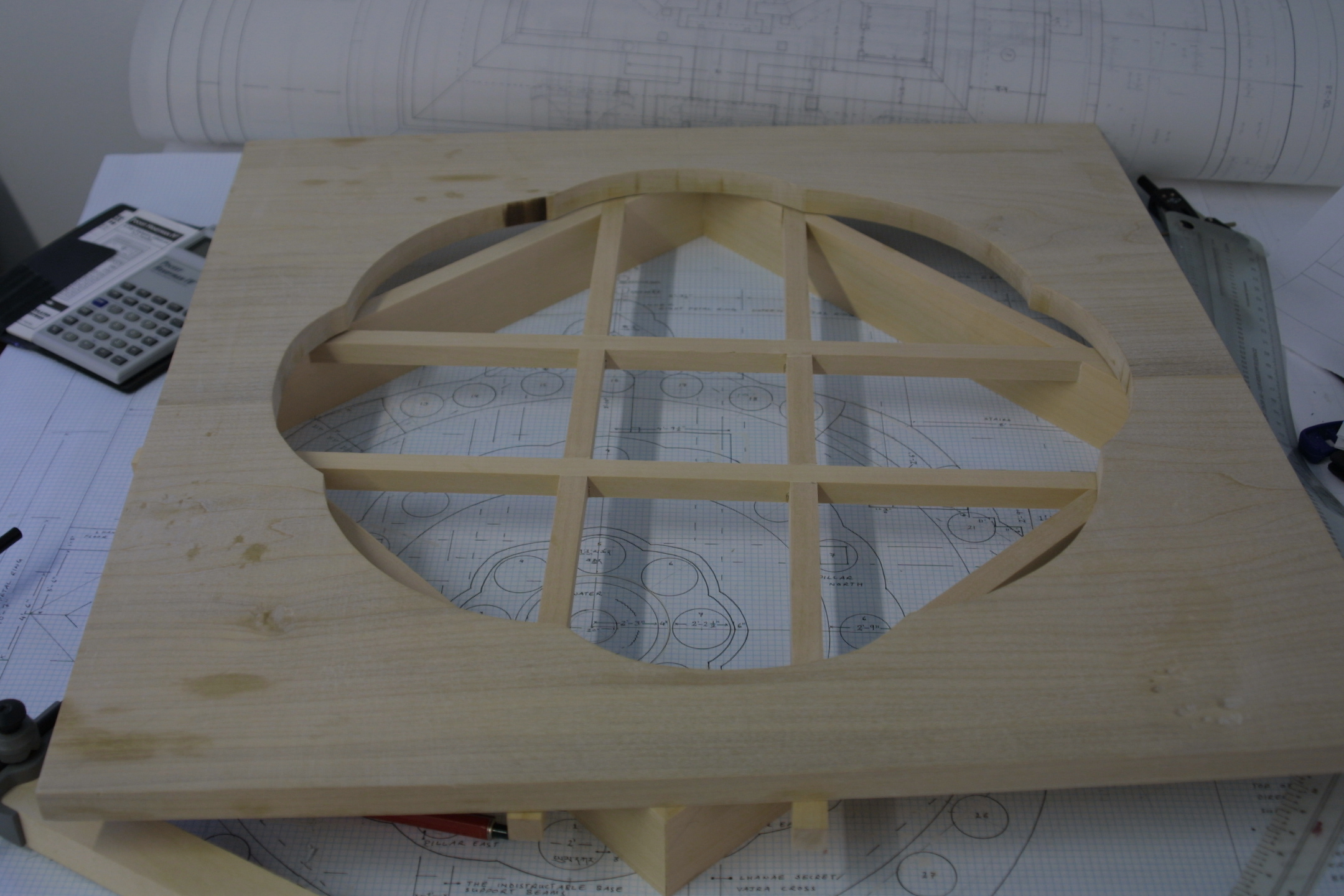
Artist Pema Namdol Thaye beginning the construction of a 3 dimensional Mandala. Copyright Padma Studios. All rights reserved.
Three-Dimensional Kalachakra Mandala Commissioned as a Catalyst for Philosophical Dialogue and Moral Reflection
At the center of the initiative is an original three-dimensional Kalachakra Mandala commissioned by the Foundation’s President, Dr. Hope Elizabeth May, who is personally financing its construction. Created by acclaimed Master of Tibetan Art Pema Namdol Thaye, the completed mandala will serve as a public educational resource and focal point for reflection on iconography, memory, time, meaning, reverence, and virtue.
The commission marks a significant moment in Thaye’s decades-long work preserving the rare tradition of three-dimensional mandala construction. Although he has created three-dimensional mandalas for monasteries and museum collections and contributed his expertise to scholarship on the historic three-dimensional Kalachakra Mandala in the Potala Palace, he has never before constructed a physical three-dimensional Kalachakra Mandala. This will be his first. A signed certificate from the artist will document its status as a unique original and his first physical three-dimensional rendering of the Kalachakra Mandala.
The commission also occupies a distinctive place within Thaye’s body of work. Commissioned and financed by an individual, it is intended not for private display but expressly as a public educational resource. The mandala will function as an “object lesson”—a work through which audiences can explore how iconography gives abstract ideas visible form, how images preserve meaning across generations, and how memory and reverence can contribute to the cultivation of virtue.
Although the mandala emerges from the sophisticated tradition of Tibetan sacred art, the project is intended for people of every background. Its purpose is to explore something shared across cultures: the human impulse to embody meaning in images and preserve through them an understanding of what deserves attention, care, and reverence.
“There is a deeply human need for reverence, and I believe that need is inseparable from our equally human need for meaning,” said May. “The important question is how those needs are met. This project seeks to create healthy opportunities for reverence—not by telling people what they must believe or revere, but by inviting them to attend to and thoughtfully reflect on beauty and symbolic meaning.”
Throughout history, human beings have entrusted deep values to words, images, and symbolic objects. Architecture, paintings, monuments, ritual objects, and memorials preserve memory and communicate meaning in ways words alone cannot.
“Iconography is not merely decorative,” said May. “The ancient ‘Art of Memory’ recognizes the power of images as instruments of memory. Images, objects, and places—such as Cora di Brazzà’s 1897 peace flag or the Peace Palace in The Hague—can reveal what a community considers worthy of remembrance, what it reveres, and what values it seeks to foreground. The question is not simply what something means, but what sustained engagement with it might teach us to see, remember, and value.”
“The mandala is a way to enter the forest,” said May. “Its visual complexity invites us into a larger philosophical landscape—one filled with questions about meaning, memory, time, reverence, virtue, and our responsibilities to oneself, to one another, and to generations beyond our own.”
For Thaye, the broad educational purpose distinguishes this commission from his previous work.
“In my career, I have created three-dimensional mandalas for monasteries and museums. This is the first commission I have accepted from an individual whose primary intention is to use the completed mandala as a public educational resource. I believe that purpose honors the tradition by allowing its symbolism and philosophical meaning to be shared with a much wider audience.”
Time is central to the initiative. Kalachakra means “Wheel of Time,” and its symbolism invites reflection on time not simply as something measured by clocks and calendars, but as a network of interconnected cycles linking the cosmos, the human person, and ethical action. Human beings inherit a world shaped by those who came before us, and our actions likewise help shape the world others will inherit.
The year 2027 marks 1,000 years since 1027, the conventional starting point of the First Rabjung—the first sixty-year cycle of the Tibetan calendrical system associated historically with adoption of the Kalachakra system. Because Kalachakra means “Wheel of Time” and places cycles of time at the heart of its symbolism, the historical moment in which this mandala is being created becomes part of the project’s meaning.
“It is especially meaningful that this commission comes as we approach 1,000 years since the beginning of the First Rabjung in 1027,” said Thaye. “Kalachakra means ‘Wheel of Time,’ and its cycles remind us that we are always receiving something from the past while creating conditions for the future. Reverence is not simply about preserving what we have inherited, but about caring for it and carrying its wisdom forward for generations to come.”
Construction formally began at Thaye’s Padma Studios on July 18, 2026, during a ceremony emphasizing gratitude, reflection, and the intention that the work become a source of learning and benefit for future generations. Thaye then drew the Brahma line, the first geometric line from which the mandala’s architectural design develops. Additional ceremonial milestones throughout 2026 and 2027 will accompany successive stages of construction.
For the Cora di Brazzà Foundation, the commission is not the culmination of the project but its beginning. The mandala will support educational resources, documentary media, and programs that engage the public. Art Reach of Mid-Michigan is scheduled to be the first venue where public audiences will encounter the completed mandala and engage with the educational project it inspires.
The larger purpose is not simply to teach audiences about Buddhist sacred art. The mandala provides a point of entry into larger human questions: why we create images and objects charged with meaning; how they preserve memory; how beauty commands attention; how attention can become reverence; and how memory, reflection, and reverence contribute to virtue, meaning, and human flourishing.
Hope Elizabeth May
The Cora di Brazzà Foundation
email us here
Legal Disclaimer:
EIN Presswire provides this news content "as is" without warranty of any kind. We do not accept any responsibility or liability for the accuracy, content, images, videos, licenses, completeness, legality, or reliability of the information contained in this article. If you have any complaints or copyright issues related to this article, kindly contact the author above.
